
 Contact:
 Delivery:
 Payments:
 Return Policy: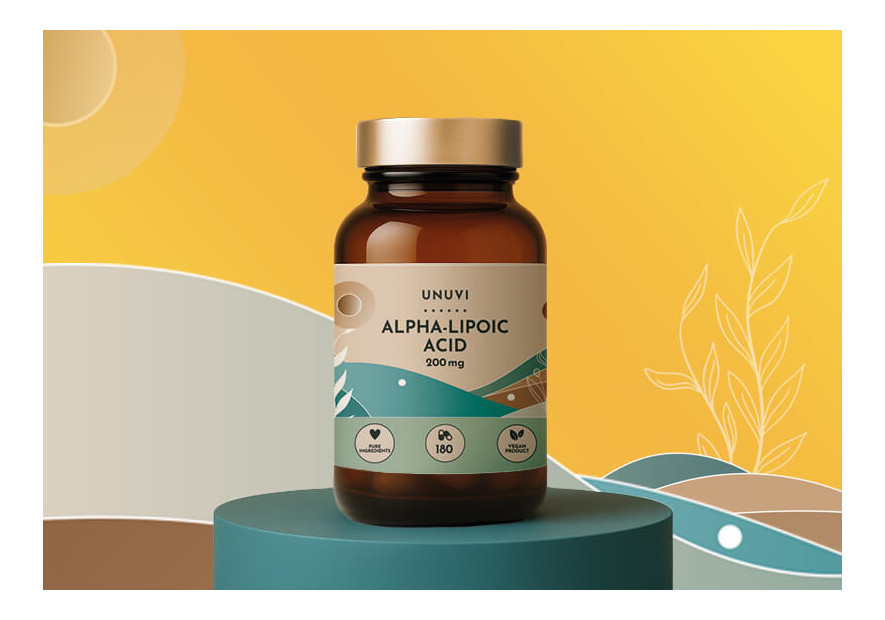
Alpha-Lipoic Acid for Insulin Resistance – Does It Work?

Insulin resistance is one of the most common metabolic disorders of the 21st century, which may lead to the development of type 2 diabetes, obesity, and hormonal imbalances. Increasing evidence suggests that alpha-lipoic acid (ALA) may effectively support improved insulin sensitivity. But does it have solid scientific backing?
In this article, we analyze the mechanisms of ALA, research findings, and its practical use in the context of insulin resistance.
What is alpha-lipoic acid and why is it unique?
Alpha-lipoic acid is a naturally occurring compound that plays a key role in cellular energy production. It is a unique antioxidant because it works in both water- and fat-soluble environments, meaning it can protect almost all cellular structures.
ALA also has the ability to regenerate other antioxidants such as vitamin C, vitamin E, and glutathione.
- supports mitochondrial function
- reduces oxidative stress
- improves glucose metabolism
- supports nervous system regeneration
Insulin resistance – what happens in the body?
Insulin resistance occurs when cells become less responsive to insulin, leading to elevated blood glucose levels. The pancreas produces increasing amounts of insulin to compensate, which over time may lead to its dysfunction.
Main mechanisms include:
- chronic inflammation
- oxidative stress
- mitochondrial dysfunction
- excess visceral fat accumulation
This is where alpha-lipoic acid may exert therapeutic effects.
How does alpha-lipoic acid affect insulin resistance?
1. Improved insulin sensitivity
ALA increases glucose uptake in muscle cells by activating the GLUT4 transporter, leading to better glucose utilization and lower blood sugar levels.
Studies have shown that alpha-lipoic acid supplementation significantly improves insulin sensitivity in individuals with insulin resistance and type 2 diabetes.
2. Reduction of oxidative stress
Oxidative stress is a key factor damaging cells and impairing insulin signaling. ALA neutralizes free radicals and helps regenerate other antioxidants.
3. Mitochondrial support
Mitochondria are responsible for energy production. Their dysfunction is often observed in insulin resistance. ALA improves their efficiency.
4. Anti-inflammatory effects
ALA reduces inflammatory markers linked to insulin resistance.
What does research say?
ALA effectiveness has been confirmed in multiple clinical studies:
Jacob S. et al. (1999): ALA supplementation improved insulin sensitivity by over 25 percent in patients with type 2 diabetes.
A 2018 meta-analysis showed that ALA significantly reduces fasting glucose and improves HOMA-IR index.
How to use ALA for insulin resistance?
- dosage: typically 300 to 600 mg daily
- timing: on an empty stomach or before meals
- form: preferably R-ALA
It is also important to consider supplement quality and formulation, which is why it is worth exploring options such as alpha-lipoic acid in capsules with a standardized dose.
What to combine ALA with?
- vitamin D
- magnesium
- chromium
- omega-3 fatty acids
- NAC (N-acetylcysteine)
Side effects
- digestive discomfort
- blood sugar drops when combined with medication
- allergic reactions
Summary
Alpha-lipoic acid is one of the most well-researched supplements supporting glucose metabolism. It may be a strong support in managing insulin resistance.

UNUVI - Alpha-Lipoic Acid 200 mg | 90 vegetarian capsules UNUVI - Alpha-Lipoic Acid 200 mg | 90 vegetarian capsules
UNUVI Alpha Lipoic...
UNUVI Alpha Lipoic Acid 200 mg is a dietary supplement with a powerful antioxidant that supports glucose metabolism and natural detoxification. Vegan HPMC capsules. Packaging: 90 vegetarian capsules.
Price zł53.90

UNUVI - Alpha-Lipoic Acid 200 mg | 180 vegetarian capsules UNUVI - Alpha-Lipoic Acid 200 mg | 180 vegetarian capsules
UNUVI Alpha Lipoic...
UNUVI Alpha Lipoic Acid 200 mg is a dietary supplement with a powerful antioxidant that supports glucose metabolism and natural detoxification. Vegan HPMC capsules. Packaging: 180 vegetarian capsules.
Price zł89.99
Leave a comment